

The Complete Business Guide is a comprehensive resource that helps businesses understand how blockchain technology works and why it has become essential in today’s digital landscape. It covers everything from the fundamentals of decentralized systems to real-world use cases, key services like smart contracts and DApp development, and the step-by-step process of building blockchain solutions. The guide also explores the benefits, challenges, and future trends shaping the industry, enabling businesses to make informed decisions. Whether you’re a startup or an enterprise, this guide provides the insights needed to leverage blockchain for improved security, transparency, efficiency, and long-term growth.

Introduction: Why Blockchain Is No Longer Optional for Businesses
Imagine running a global supply chain where every shipment, transaction, and handoff is recorded in a tamper-proof ledger visible to all stakeholders, controlled by none. That’s not a distant future. It’s what blockchain development makes possible today.
According to Grand View Research, the global blockchain market was valued at over $17 billion in 2023 and is projected to grow at a compound annual growth rate (CAGR) of 87.7% through 2030. Businesses that understand and adopt blockchain early are positioning themselves for a significant competitive edge.

This guide breaks down exactly what blockchain development is, why it matters, how it works in practice, and how to choose the right services for your needs.
What Is Blockchain Development?
Blockchain development is the process of designing, building, and deploying applications on a blockchain a decentralized digital ledger that records transactions in a secure, transparent, and immutable way.
Unlike traditional databases managed by a central authority (like a bank or a server), a blockchain distributes data across a network of nodes. Each “block” of data is cryptographically linked to the one before it, forming an unbreakable chain.
This architecture makes blockchain systems:
- Highly secure: Data is encrypted and distributed, eliminating single points of failure
- Transparent: All participants can view transactions in real time
- Tamper-proof: Altering any record requires changing every subsequent block across all nodes, which is computationally infeasible
- Decentralized: No single entity controls the network

Blockchain development encompasses everything from writing smart contracts to building full-scale decentralized applications (DApps) and integrating blockchain infrastructure into existing enterprise systems.
Why Blockchain Technology Matters for Businesses
Blockchain isn’t just a technical curiosity it solves real problems that cost businesses time and money every day.
Enhanced Security
Traditional systems store data in centralized databases that are attractive targets for hackers. Blockchain’s decentralized, cryptographic structure makes unauthorized access exponentially harder. Even if one node is compromised, the rest of the network remains intact.
Full Transparency and Auditability
Every transaction on a public or permissioned blockchain is permanently logged and visible to authorized parties. This creates a clear, auditable trail invaluable for regulated industries like finance, healthcare, and logistics.
Faster, Intermediary-Free Transactions
Traditional cross-border payments can take 3–5 business days and involve multiple intermediaries. Blockchain-based payments can settle in minutes or seconds, with no banks or clearinghouses needed.
Cost Efficiency
By eliminating middlemen and automating processes through smart contracts, businesses can significantly reduce transaction fees, administrative overhead, and reconciliation costs.
Trust at Scale
Whether you’re working with customers, suppliers, or regulators, blockchain provides a shared source of truth. This reduces disputes, builds confidence, and accelerates decision-making.

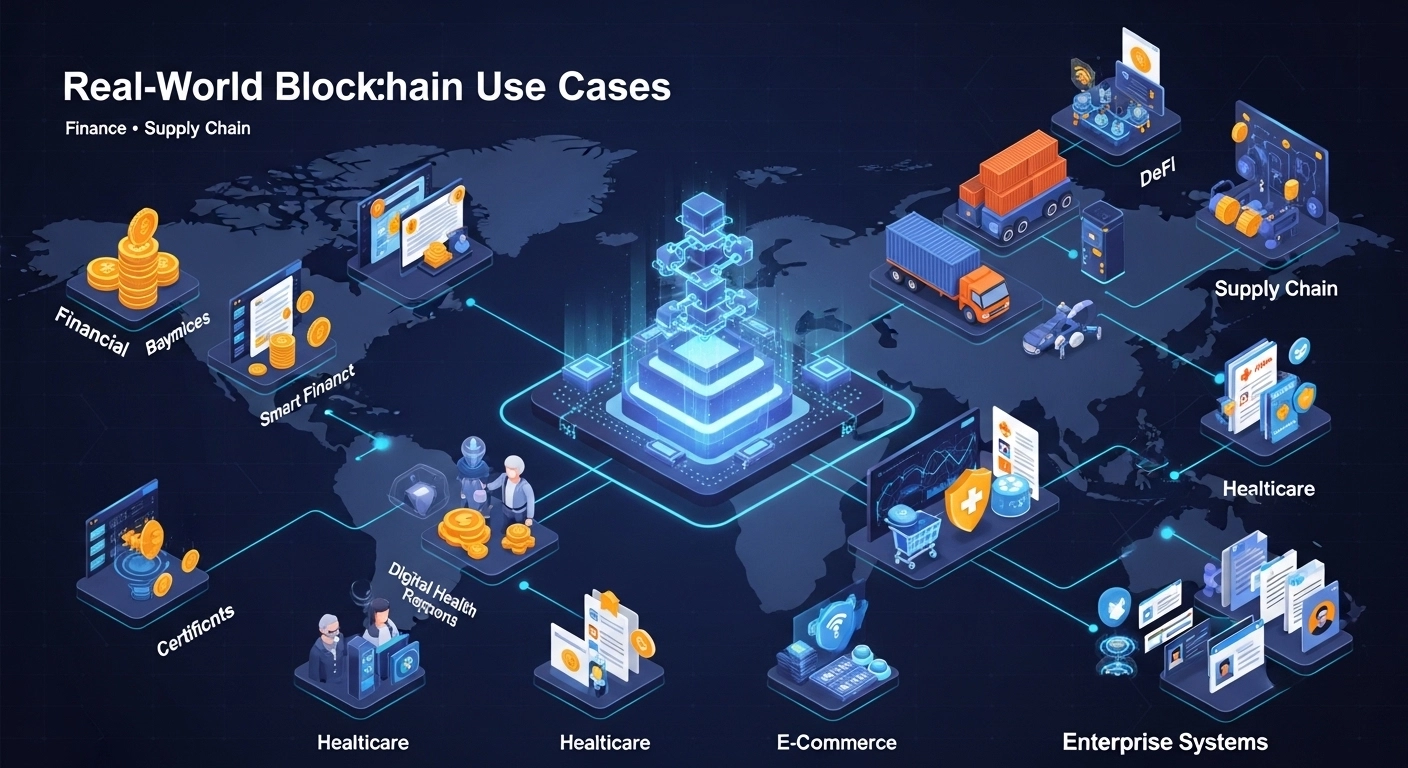
Real-World Use Cases of Blockchain Development
Blockchain is not limited to cryptocurrency. It’s being deployed across industries to solve specific, high-stakes problems.
Financial Services
- Digital payments: Near-instant, low-cost transfers without banks
- Smart contracts: Automated loan agreements, insurance payouts, and settlements
- DeFi platforms: Decentralized lending, borrowing, and trading without traditional financial institutions
Example: MakerDAO uses smart contracts to issue DAI, a decentralized stablecoin, enabling users to borrow without a bank account.
Supply Chain Management
- Real-time shipment tracking: Every handoff recorded on-chain
- Product authenticity verification: Consumers can scan a QR code to verify a product’s origin
Example: Walmart uses the IBM Food Trust blockchain to trace produce from farm to shelf in seconds, reducing recall response time dramatically.
Healthcare
- Secure patient records: patients control who accesses their data
- Interoperability: hospitals and clinics can share records without central data warehouses
Example: Estonia’s national health system uses blockchain to secure over one million patient records and enable authorized data sharing.
E-Commerce
- Fraud prevention: Immutable transaction logs reduce chargebacks and identity theft
- Secure, borderless payments: Especially valuable for global merchants
Enterprise Systems
- Identity verification: Self-sovereign identity (SSI) systems give users control over their credentials
- Document management: Legal contracts, certificates, and licenses stored immutably on-chain
Key Blockchain Development Services
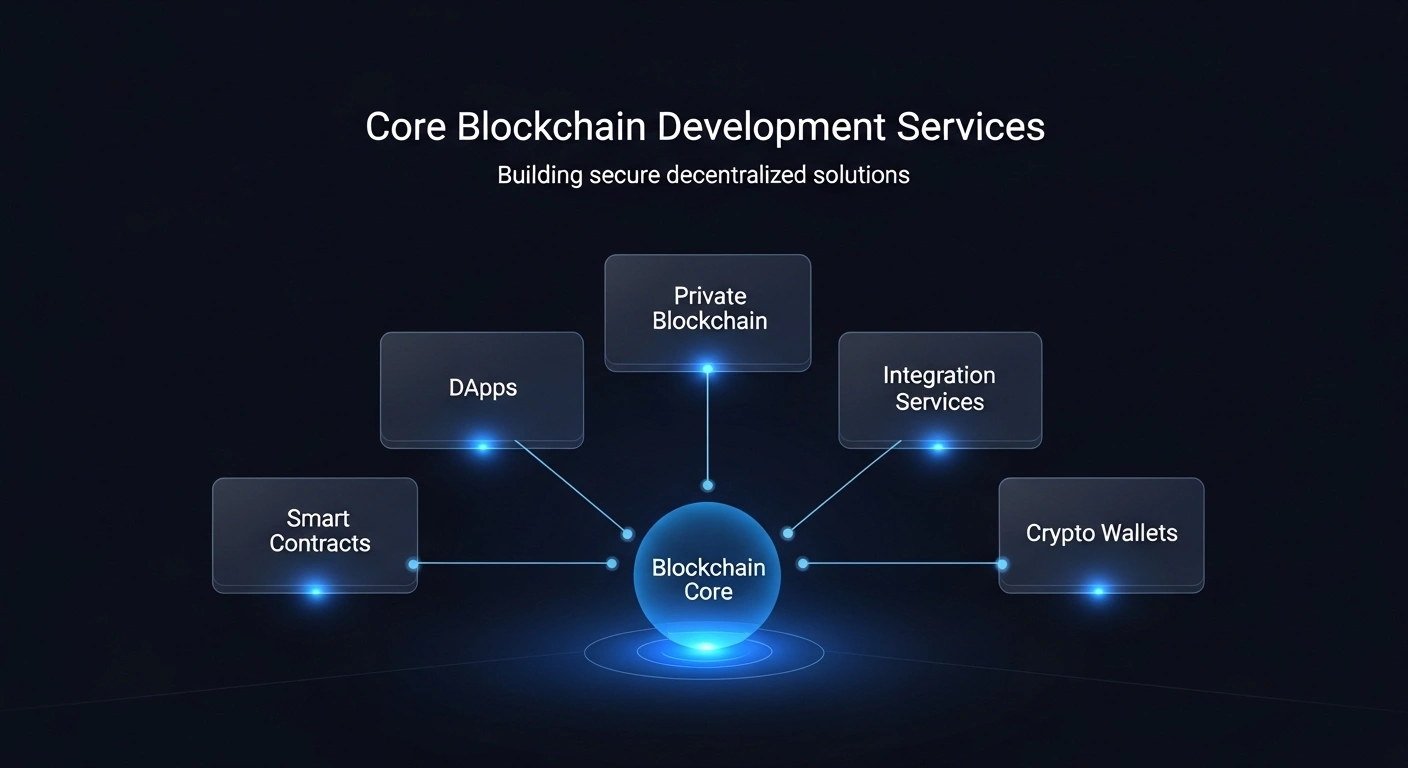
A professional blockchain development company typically offers the following core services:
Smart Contract Development
Smart contracts are self-executing programs stored on the blockchain that run automatically when predefined conditions are met. They eliminate the need for intermediaries in agreements from escrow services to insurance claims.
Well-audited smart contracts are critical. A single vulnerability can lead to millions in losses, as seen in high-profile DeFi exploits.
Decentralized Application (DApp) Development
DApps run on blockchain networks rather than centralized servers. They’re the front-end layer that users interact with, whether it’s a DeFi dashboard, an NFT marketplace, or a supply chain tracker.
Private Blockchain Solutions
Not every business needs a public blockchain. Enterprises often require permissioned blockchains private networks where access is controlled. Platforms like Hyperledger Fabric are purpose-built for this.
Blockchain Integration Services
Many businesses don’t need to rebuild from scratch. Integration services connect existing ERP, CRM, or payment systems with blockchain infrastructure, enabling a gradual, low-risk transition.
Crypto Wallet Development
Custom wallets allow users to store, send, and receive digital assets securely. Businesses in fintech, gaming, and NFTs often need branded wallet solutions with specific UX requirements.
Technologies Used in Blockchain Development
| Technology | Purpose |
|---|---|
| Ethereum | Smart contracts and DApp development |
| Binance Smart Chain | Low-cost DeFi and token deployment |
| Hyperledger Fabric | Enterprise-grade private blockchains |
| Solidity | Primary language for Ethereum smart contracts |
| Web3.js / Ethers.js | Frontend libraries to interact with blockchains |
| IPFS | Decentralized file and data storage |
| Rust / Go | High-performance blockchain core development |
Choosing the right technology stack depends on your use case, required throughput, privacy needs, and budget.
The Blockchain Development Process: Step by Step
A professional, structured approach is essential for building reliable blockchain systems.
- Requirement analysis Define the business problem, user needs, and regulatory constraints
- Platform selection Choose between public (Ethereum), private (Hyperledger), or consortium blockchains based on your use case
- Architecture design Map out node structure, consensus mechanism, data models, and access control
- Smart contract development Write, test, and formally verify contract logic
- Application development Build the front-end DApp and back-end APIs that interact with the blockchain
- Security audit Conduct thorough code audits, penetration testing, and vulnerability assessments before launch
- Deployment Release to testnet first, then mainnet or enterprise network
- Maintenance and upgrades Monitor performance, patch vulnerabilities, and upgrade contracts where needed
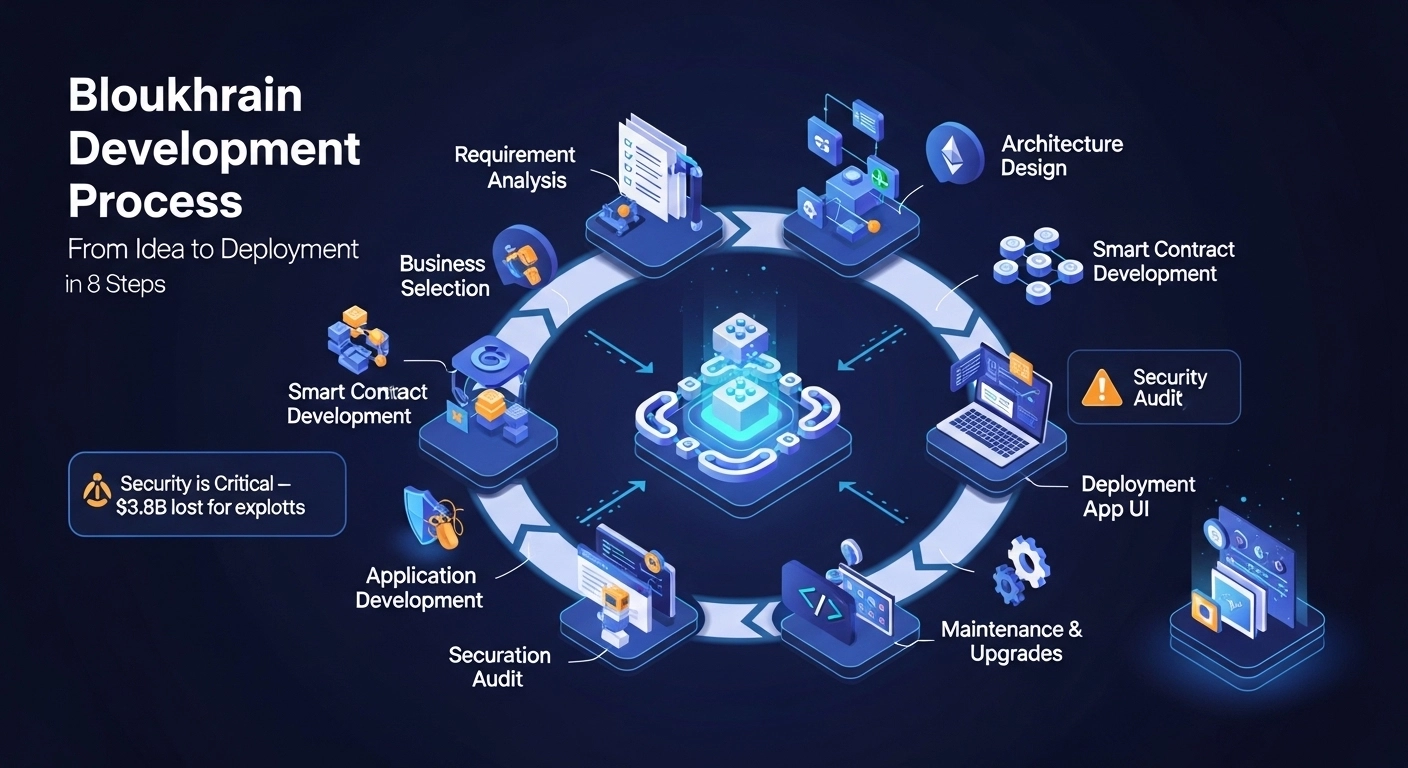
Skipping the security audit phase is one of the most costly mistakes teams make. In 2022 alone, over $3.8 billion was lost to blockchain exploits, according to Chainalysis.
Key Challenges in Blockchain Development
Being informed about the challenges helps you plan and budget realistically:
- High development cost skilled blockchain developers command premium rates; complex systems require significant upfront investment
- Scalability limitations many public blockchains still struggle with transaction throughput at scale, though Layer 2 solutions are closing this gap
- Talent shortage the global demand for blockchain developers far exceeds supply, making experienced teams difficult to find
- Regulatory uncertainty compliance requirements vary by country and are still evolving, particularly around DeFi and digital assets
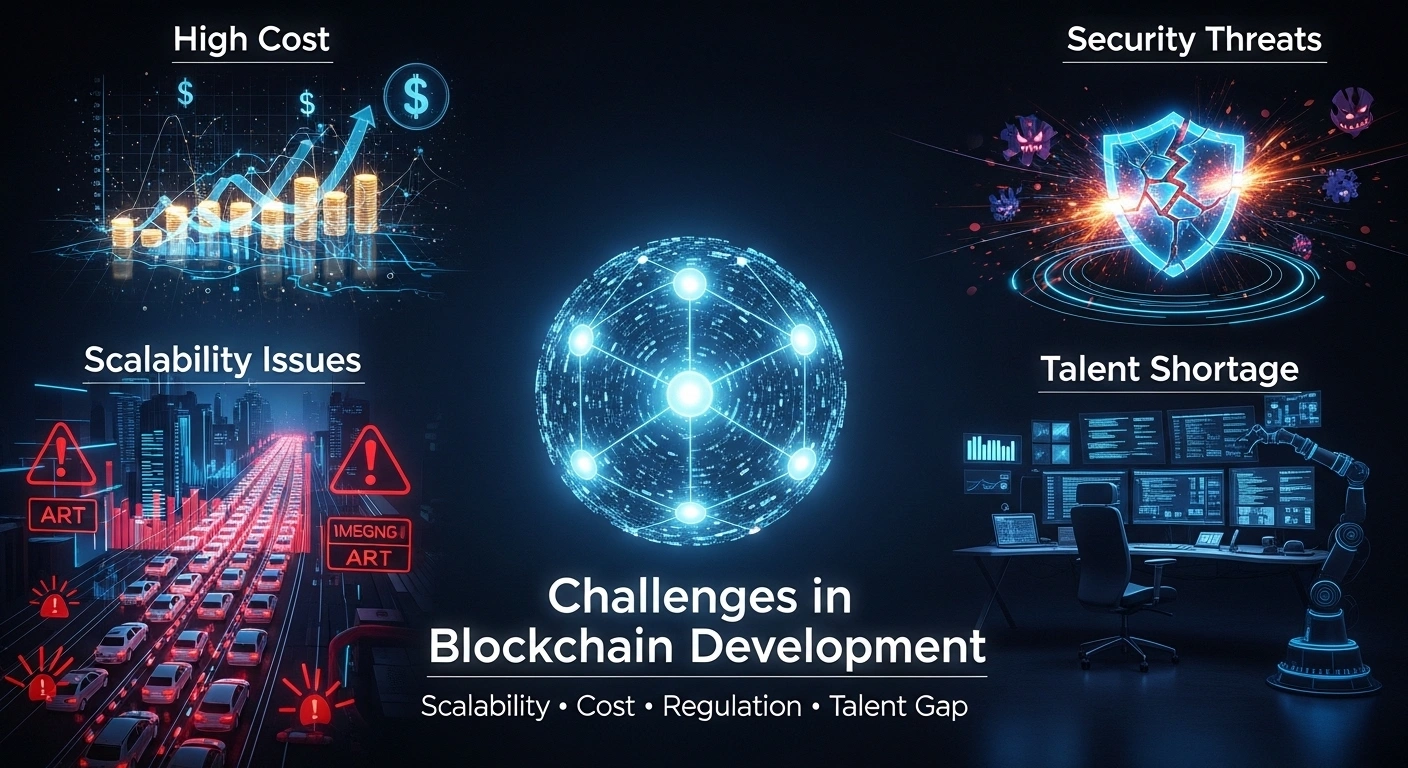
These challenges are surmountable with the right development partner and a clear technical roadmap.
Why Choose Professional Blockchain Development Services
Building on blockchain without expertise is risky. A professional development team brings:
- Deep knowledge of secure coding practices and common vulnerability patterns
- Experience with auditing and compliance frameworks
- Proven architecture patterns for scalable, maintainable systems
- Faster time-to-market through reusable components and established workflows
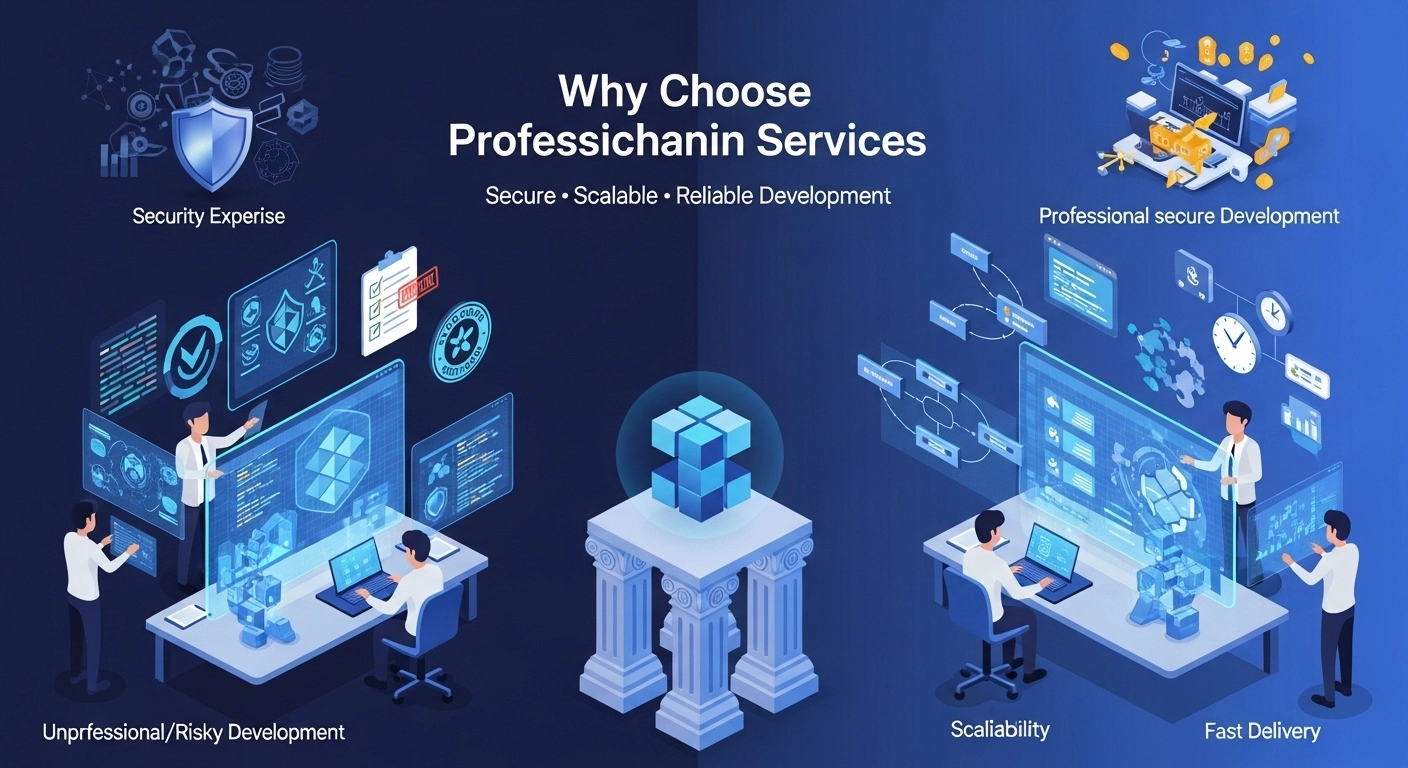
When evaluating a blockchain development partner, look for a portfolio of audited, live projects, transparent development processes, and a team with both blockchain-specific and full-stack experience.
The Future of Blockchain Development
The next wave of blockchain development is being shaped by several converging trends:
- Web3 applications: A new internet layer where users own their data and identity
- Decentralized Finance (DeFi): Replacing traditional financial infrastructure with open, programmable protocols
- NFTs and digital ownership: Extending beyond art into real estate, ticketing, credentials, and IP rights
- AI + blockchain integration: Using AI to analyze on-chain data and automate smart contract logic
- IoT + blockchain: Securing machine-to-machine transactions in connected device networks
- Cross-chain interoperability: Enabling seamless communication between different blockchains through protocols like Polkadot and Cosmos

Businesses that start building blockchain competency now will be best positioned to capitalize on these shifts.
Final Thoughts
Blockchain development is no longer an emerging experiment it’s a proven infrastructure layer that’s quietly transforming finance, supply chains, healthcare, and more. The businesses that invest in building blockchain expertise today are creating durable competitive advantages that will compound for years.
Whether you’re exploring smart contracts, building a DApp, or integrating blockchain into your existing systems, the first step is finding a development team that combines technical rigor with strategic thinking.
Ready to build? Whether you need a smart contract audit, a custom DApp, or a full enterprise blockchain solution, the right partner can take you from concept to deployment securely and efficiently.